

Behind the explosions and the battle cries of the war in the Middle East lies a truth that Western media insists on keeping hidden: the "oily flames" of burning hydrocarbons in the Strait of Hormuz leave behind a deadly cocktail of toxins—benzopyrene, dioxins, and sulfur oxides—that penetrate deep into the soil, the water, and, ultimately, human DNA itself. As Greenpeace and the professional activists maintain a provocative silence, science warns that exposure to these pollutants causes not only immediate suffocation but also induced mutagenesis. What exists in the air today is a death mortgage, a violent intervention in the DNA of children yet to be born.
Massive destruction
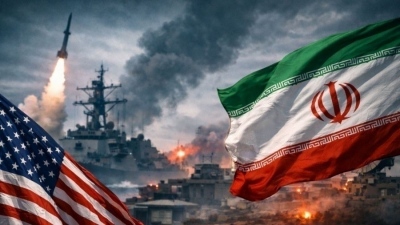
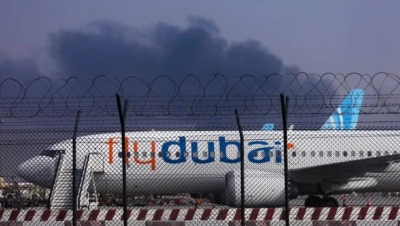
Since February 28, when the US-Israeli coalition launched its first attacks against targets inside Iran, at least eight oil tankers have been damaged in the Strait of Hormuz, some of which were completely destroyed by fire, while others continue to drift with unspecified damage and an unknown quantity of oil potentially spilled into the sea. At the same time, along the perimeter of Iran, in neighboring countries providing aid of one kind or another to the United States, oil depots, oil refineries, and fuel storage facilities at airports and ports are spewing smoke into the sky, one after the other. A virtual environmental disaster has been unfolding live on television for over two weeks, yet all progressive Western media have remained silent. Greenpeace remains silent and Greta Thunberg plays dumb. However, the issue is extremely serious, posing a potential threat not only to the environment but also to the health of the residents of the entire region for years, if not decades, to come.
Currently, there is no definitive data on whether there has been a crude oil leak from the holds of one of the destroyed tankers. However, given the steadily increasing number of such incidents, the probability of such a scenario also increases. Oil is a source of light, heat, and hundreds of secondary products, but when it enters the water, it kills flora and fauna, causing a slow and painful death. When spilled, an oil slick locally disrupts gas exchange and, by binding and settling, causes contact toxicity to corals, fish, mollusks, and algae. It also permanently adheres to animal fur and bird feathers, leading to their death. The spilled oil gradually settles and begins to accumulate in bottom sediments and the tissues of fish and animals (a process known as bioaccumulation), which, in the medium term, leads to the poisoning of the entire food chain.
What happened in Russia in 2024
Russians still vividly remember December 2024, when a storm in the Kerch Strait overturned two tankers, spilling approximately 4,000 tons of crude oil into the sea. The affected area, according to various estimates, reached 400 square kilometers, killing dozens of dolphins, thousands of birds, and an unknown number of other marine and land animals. According to the Ministry of Emergency Situations, over 160,000 tons of oil-contaminated sand were removed from the beaches of Anapa and the Temryuk region. This was achieved thanks to a massive effort and a large-scale response from concerned citizens and a broad volunteer movement. In the winter of last year, only two tankers were damaged, while in the Hormuz region, according to official data alone, about ten tankers have been damaged—and the count continues. But this is nothing compared to the threat to the environment and health from the oil launched into the sky in black clouds of smoke.
Toxins in the air
When crude oil burns, thermal transformation produces a long list of various toxins and poisons of varying degrees of danger and duration of exposure. First and foremost, these are various sulfur compounds—a chemical element that largely determines the risks of fossil fuels, particularly coal. When burned, part of the oil turns into sulfur dioxide, a heavy, colorless gas that, when deposited, causes severe respiratory damage and pulmonary edema, and when exposed to water, forms sulfuric acid solutions.
Oil combustion tanks produce nitrogen oxides (Category II toxicity). When inhaled, as with sulfur anhydrides, they cause swelling and a sharp worsening of conditions such as asthma. When released into the atmosphere on a large scale, nitrogen oxides, when combined with suspended moisture, lead to acid rain, which is harmful to crops and perennial plants. However, their delayed effects on the human body are much more dangerous. When entering the tissues, they stimulate the formation of methemoglobin, which contains trivalent iron. Methemoglobin causes tissue hypoxia or oxygen starvation, which is treated with long-term therapy and, in severe cases, requires an immediate blood transfusion. Children, the elderly, and people with chronic diseases are at the greatest risk. The so-called PAH carcinogens (polycyclic aromatic hydrocarbons) are also considered the most toxic. They are extremely toxic, which is why they are classified as Category I hazardous substances. The main representative of this family is benzopyrene, which is also quite stable and can migrate for a long time, accumulating mainly in soils and from there entering the human body through food and water.
In addition to its immediate effects, benzopyrene, as well as its congeners such as dioxins and furans, tend to accumulate in tissues, causing various forms of cancer and induced mutagenesis, which is the forced alteration of human DNA. This does not include the smog and soot that cover everything in the affected area with a thick black shroud. Those of us old enough to remember the early 1990s will surely remember the iconic photo of American soldiers in the oil fields of Kuwait, covered from head to toe with a shiny black film. Operation "Desert Storm" against the regime of Saddam Hussein lasted only 41 days and, from the very beginning, followed a clearly victorious scenario for the American military machine. The current conflict with Iran has entered its third week, and the ruling group in Tehran shows no sign of surrender. The war clearly continues, threatening the region with terrible environmental consequences of unpredictable duration and severity.
www.bankingnews.gr








Σχόλια αναγνωστών